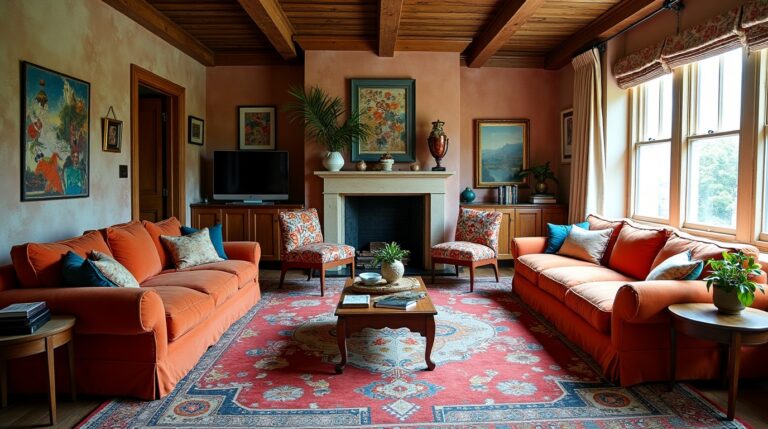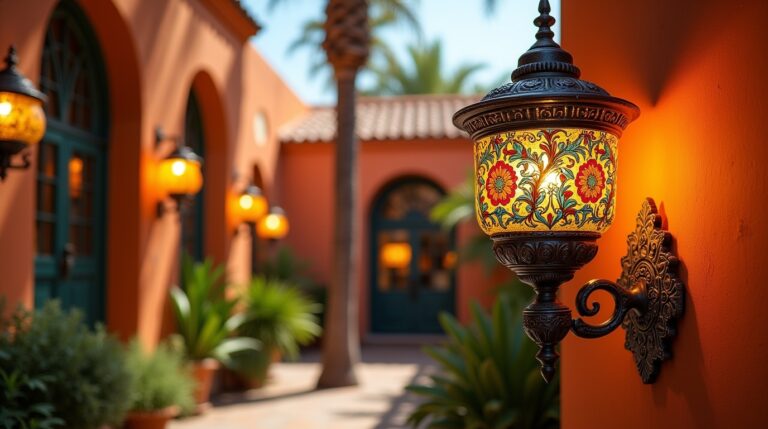
Best Mexican Wall Art for Living Room (2026)
Walk into any home filled with Mexican decor and you feel it right away. The colors. The warmth. The story on every wall. That feeling doesn’t happen by accident. It starts with the art.
In 2026, Mexican wall art is having a major moment. People are tired of plain, boring walls. They want color. They want history. They want a living room that feels like a place, not just a room. And nothing brings that energy in faster than the right piece of Mexican wall art.
Table of Contents
This guide walks you through the best Mexican wall art for your living room this year. You’ll learn what’s trending, what each style means, where to place it, and how to avoid common mistakes. Whether you love bold Talavera tiles or soft folk art paintings, there’s something here for you.
Why Mexican Wall Art Is Trending in 2026
Mexican decor has been growing in popularity for years, and 2026 is no different. More homeowners are moving away from cold, minimalist spaces. They want rooms that feel lived-in, personal, and full of life.
A big part of this comes from social media. Pinterest boards full of colorful courtyards, Talavera tile accents, and hand-painted art have inspired millions of people to bring that same energy into their own homes. These images get saved, shared, and recreated again and again.
There’s also a deeper reason behind the trend. Mexican wall art is often handmade. Real artists paint these pieces, often using techniques passed down through generations. In a world full of mass-produced decor, something handmade feels special. It feels real.
The colors play a big role too. Think warm terracotta, deep blues, sunny yellows, and bright pinks. These shades bring instant warmth to a room, no matter the season. They pair beautifully with both modern and traditional furniture, which makes them easy to work into almost any home.
What Makes Mexican Wall Art Unique?
Mexican wall art stands out because it tells a story. Every pattern, color, and symbol usually means something.
Take Talavera pottery, for example. This style comes from Puebla, Mexico, and dates back hundreds of years. Artists hand-paint each tile with intricate floral and geometric designs. No two pieces are exactly alike, which gives every wall a one-of-a-kind look.
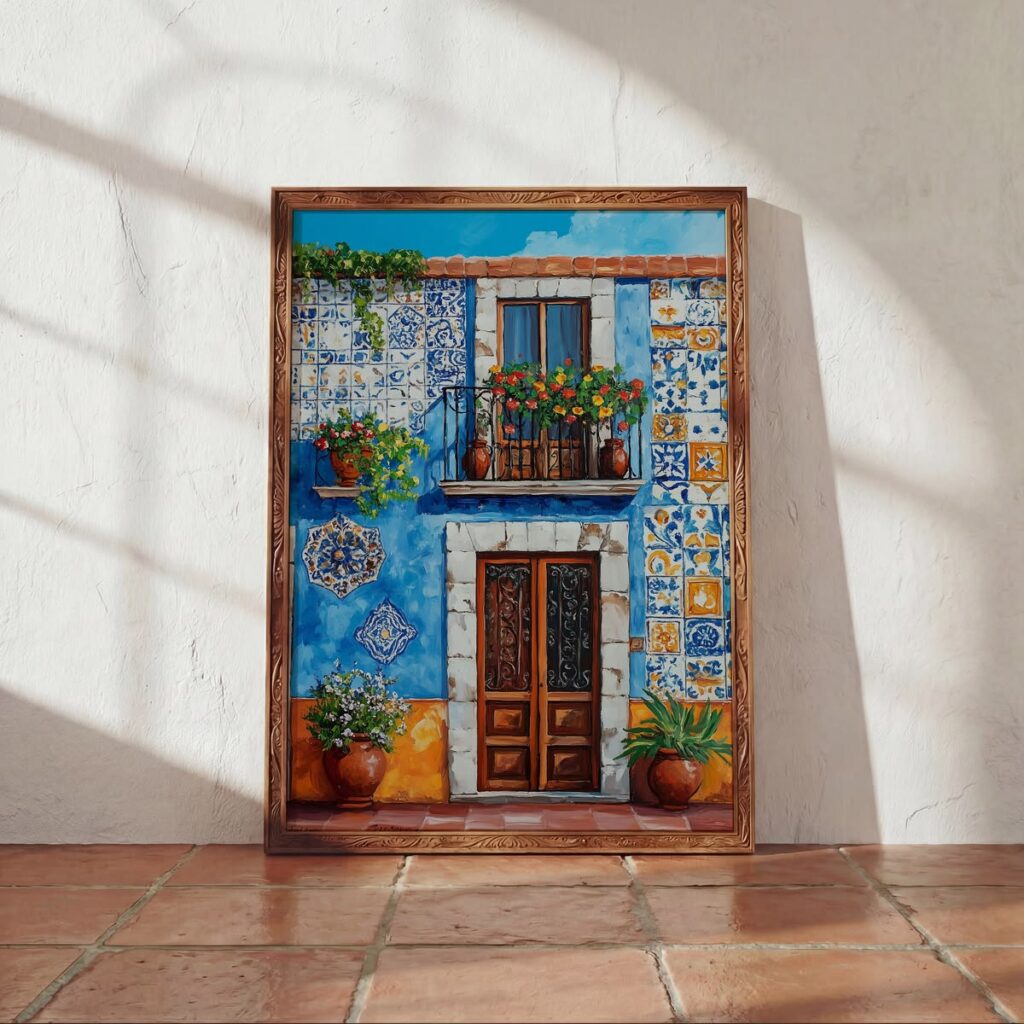
Folk art is another huge part of Mexican design. You’ll see bright animals, flowers, skulls, and scenes from daily life. These pieces often connect to traditions like Día de los Muertos, which celebrates loved ones who have passed away. A skull painting in this style isn’t spooky. It’s colorful, joyful, and full of meaning.
Indigenous art also plays a role. Patterns from Otomi embroidery, Huichol bead art, and Oaxacan weaving show up in modern wall hangings and canvas prints. These designs often feature animals, plants, and nature scenes in bold, contrasting colors.
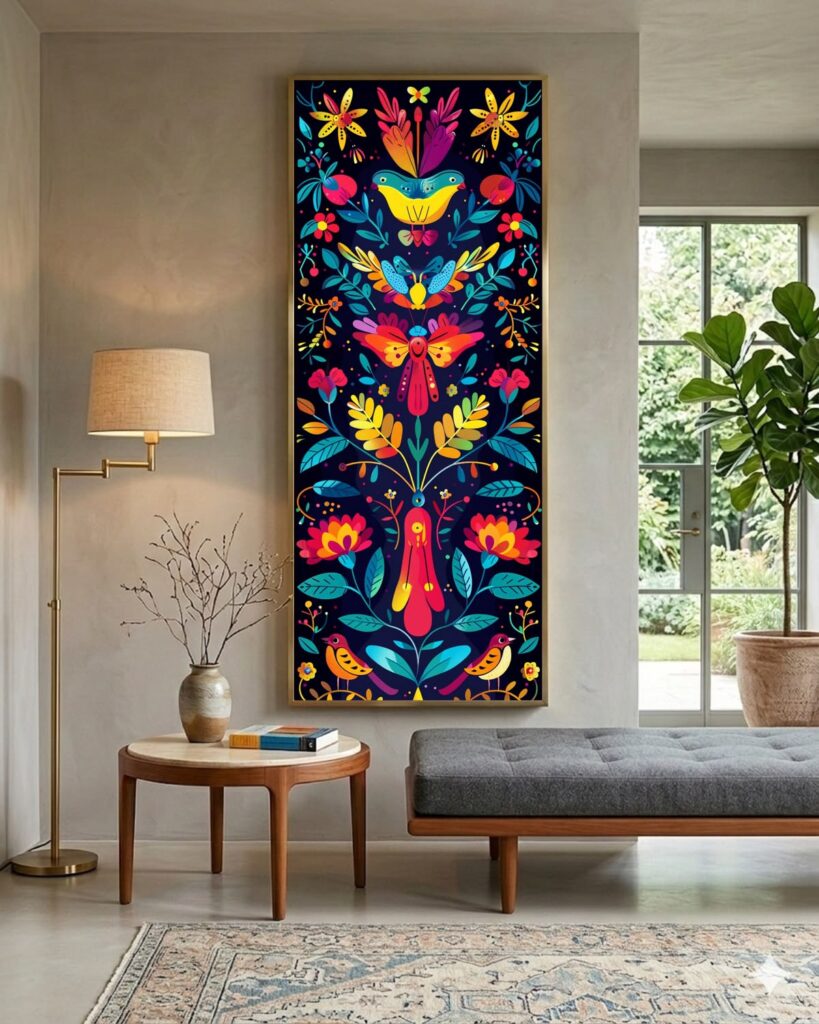
When you bring these pieces into your home, you’re not just adding decoration. You’re adding culture, history, and craftsmanship to your walls.
Best Mexican Wall Art for Living Room (2026)
Here’s a closer look at the top styles of Mexican wall art for your living room this year. Each one brings something different to the table, so pick the ones that match your space and your style.
Talavera Tile Wall Art
Talavera tile art uses hand-painted ceramic tiles, often arranged into a frame or mounted on a wood backing. The designs usually include flowers, swirls, and geometric shapes in blue, yellow, green, and white.
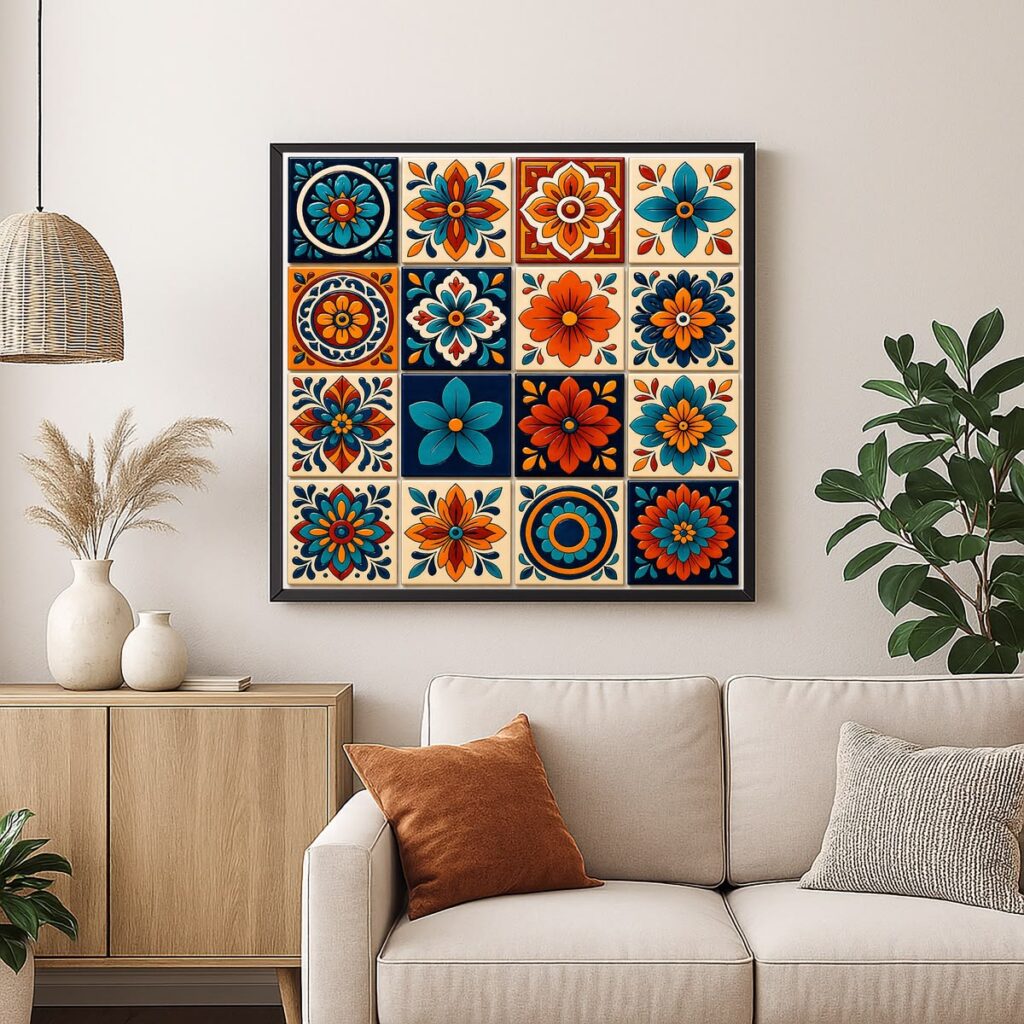
- Design style: Traditional, colorful, and detailed
- Best placement: Above a console table, fireplace, or as a small accent near a doorway
- Color combinations: Cobalt blue and white, or warm yellow and terracotta
- Styling tip: Use one large piece as a focal point instead of several small ones, so the pattern doesn’t feel too busy
- Pros: Durable, authentic, adds instant texture
- Cons: Can be heavy and may need sturdy wall anchors
Hand-Painted Mexican Canvas Art
These are canvas paintings created by artists, often showing village scenes, florals, or abstract color blocks inspired by Mexican landscapes.
- Design style: Artistic, expressive, and vibrant
- Best placement: Above a sofa or as the centerpiece of a gallery wall
- Color combinations: Sunset oranges, pinks, and purples
- Styling tip: Choose a canvas that includes at least one color already in your room, like a throw pillow or rug, to tie everything together
- Pros: Lightweight and easy to hang
- Cons: Quality varies a lot, so look closely at brushwork and canvas material before buying
Frida Kahlo-Inspired Artwork
Frida Kahlo is one of the most recognized Mexican artists in the world, and her style has inspired countless prints, paintings, and posters.
- Design style: Bold, emotional, and symbolic
- Best placement: A reading nook, hallway, or as part of a curated gallery wall
- Color combinations: Deep greens, reds, and floral patterns
- Styling tip: Pair with simple frames so the artwork stays the main focus
- Pros: Instantly recognizable and conversation-starting
- Cons: Can feel overdone if it’s the only style of art in the room, so balance it with other pieces
Mexican Folk Art Paintings
Folk art paintings often show everyday life, animals, or festive scenes using bright, flat colors and simple shapes.
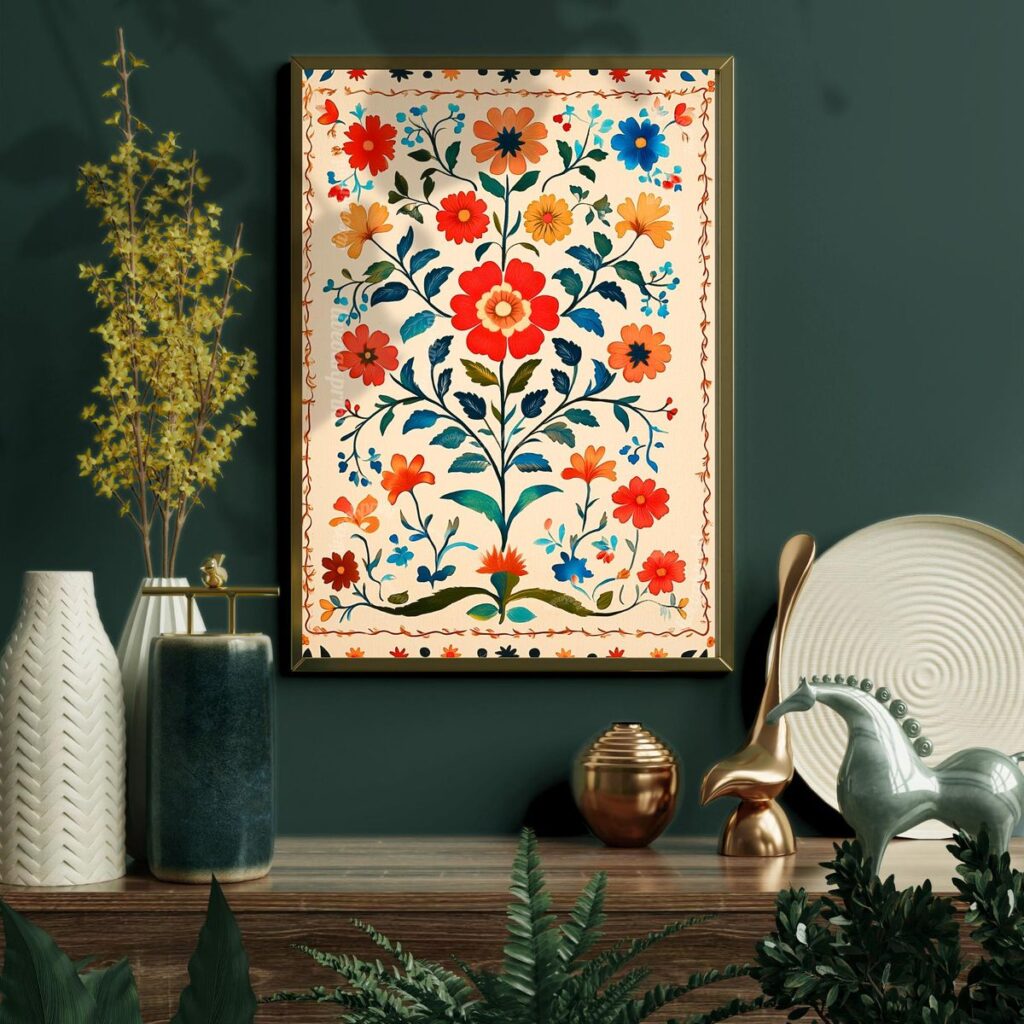
- Design style: Playful, colorful, and rooted in tradition
- Best placement: Family rooms, kitchens that open into the living area, or kids’ play corners
- Color combinations: Bright reds, yellows, and greens with black outlines
- Styling tip: Use a few smaller folk art pieces grouped together in a cluster for a cozy, collected look
- Pros: Adds personality and warmth
- Cons: Strong colors can clash if the rest of the room is already busy
Rustic Wooden Mexican Wall Decor
This includes carved wooden panels, painted wooden signs, and decorative wood pieces with traditional motifs.
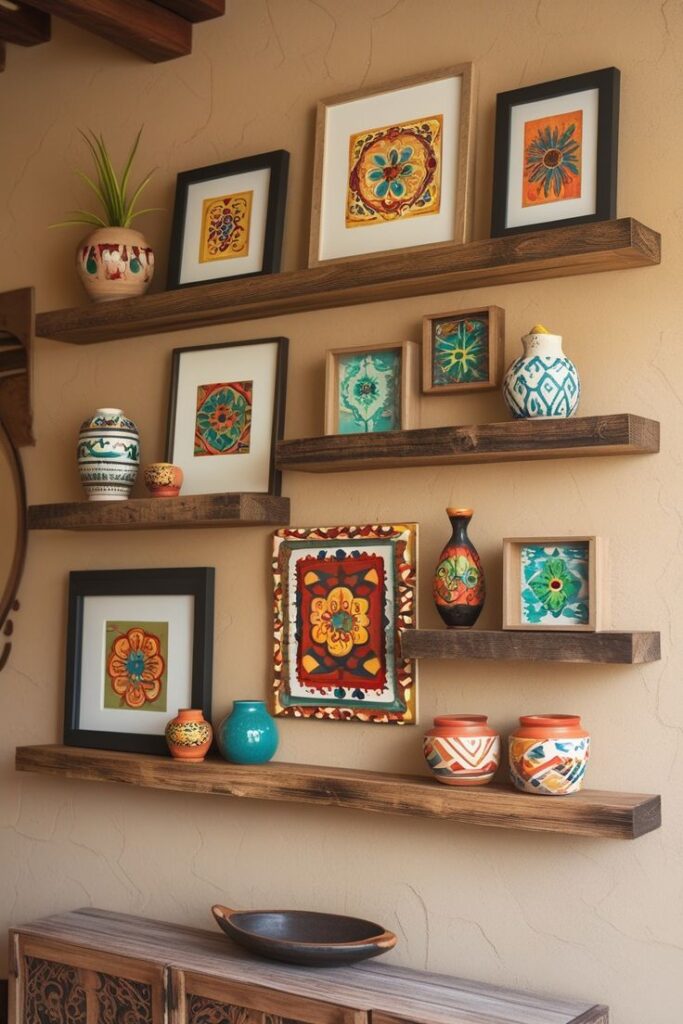
- Design style: Earthy, rustic, and warm
- Best placement: Above a fireplace, on an accent wall, or in entryways
- Color combinations: Natural wood tones paired with deep red or turquoise accents
- Styling tip: Mix wood pieces with metal or ceramic accents for texture variety
- Pros: Adds warmth and works well with farmhouse or hacienda-style furniture
- Cons: Heavier pieces may require professional mounting
Sun and Moon Wall Sculptures
These are decorative metal or wood sculptures shaped like the sun, moon, or both, often with rays or facial details.
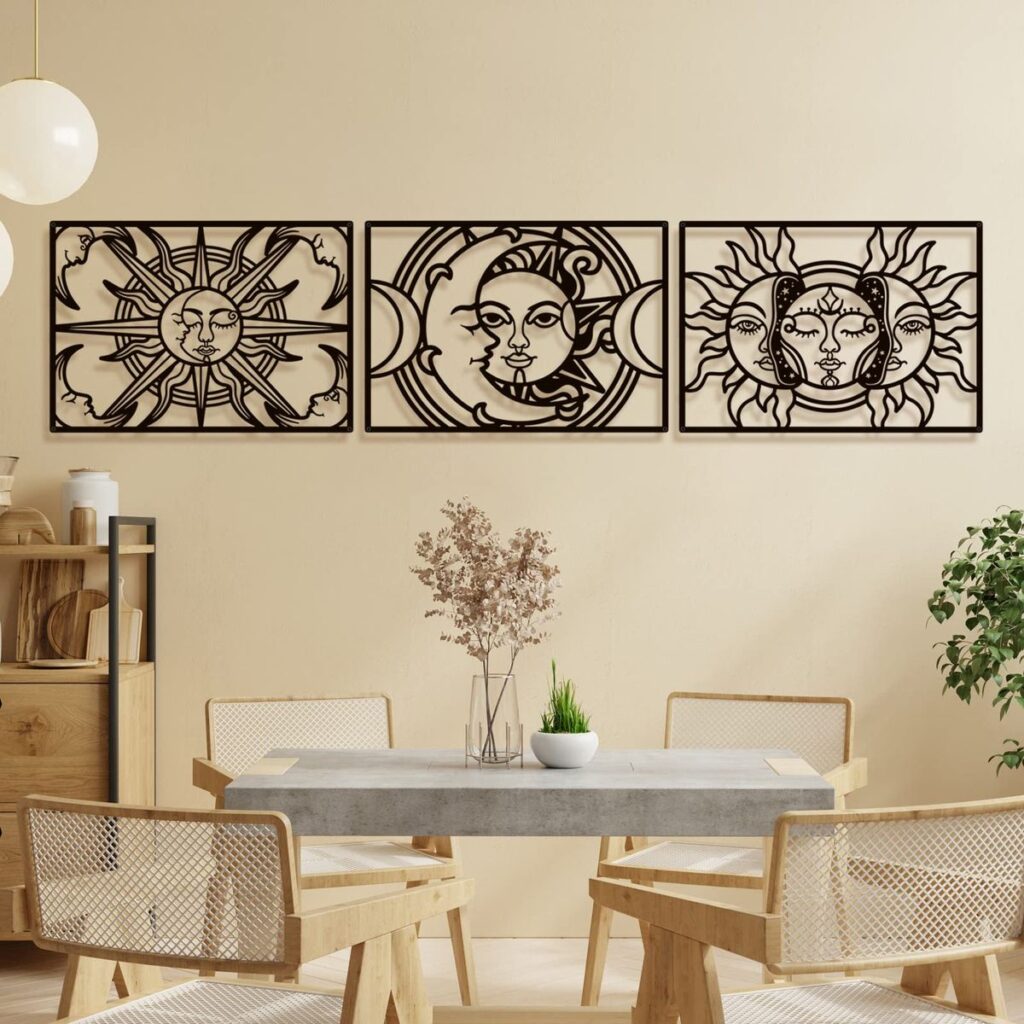
- Design style: Symbolic, bold, and sculptural
- Best placement: Centered above a sofa or as a statement piece on an empty wall
- Color combinations: Gold, copper, or black metal tones against light walls
- Styling tip: Hang slightly higher than eye level to make the piece feel grand
- Pros: Lightweight, easy to clean, and works in many styles of homes
- Cons: Can look small on very large walls unless sized correctly
Colorful Metal Wall Art
Metal wall art includes painted tin pieces, punched metal designs, and colorful sculptures often shaped like flowers, birds, or stars.
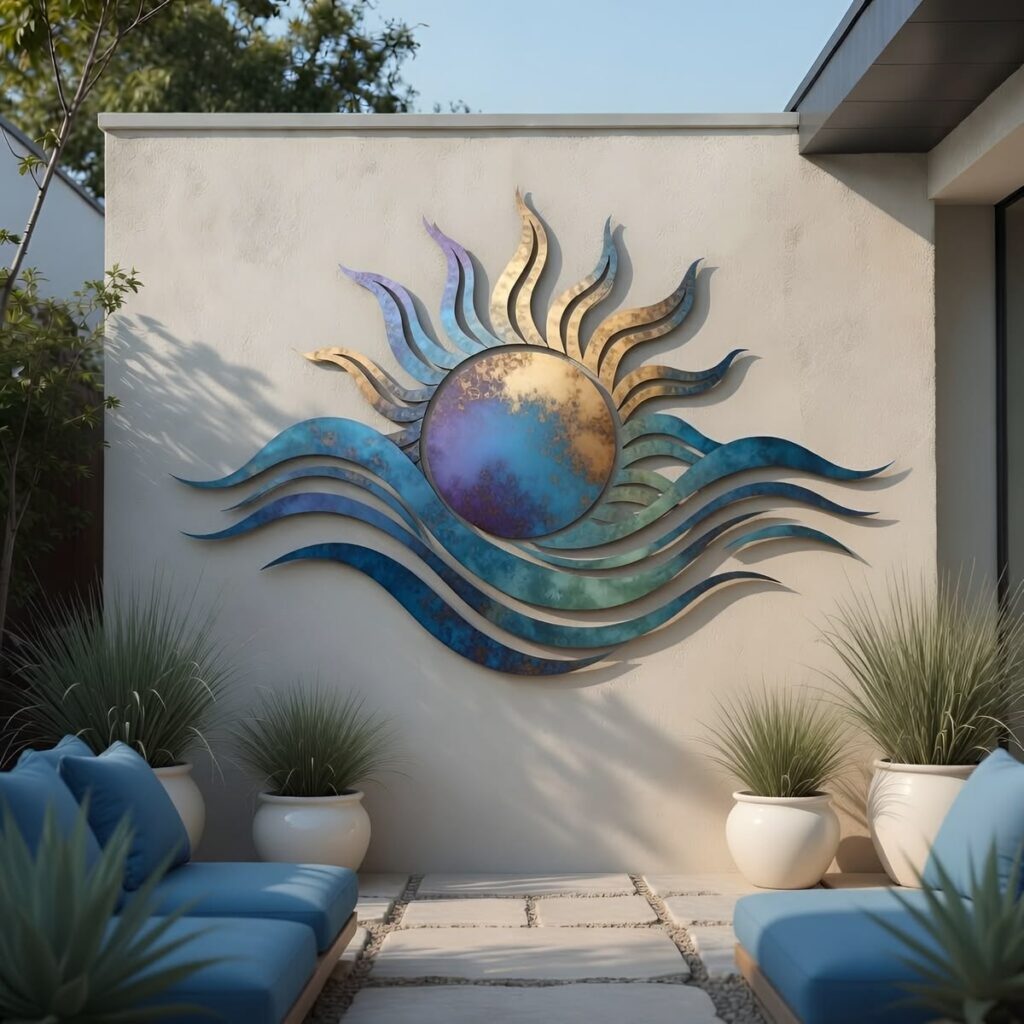
- Design style: Bold, folk-inspired, and textured
- Best placement: Outdoor-style living rooms, sunrooms, or as an accent near windows
- Color combinations: Bright blues, pinks, and oranges against neutral walls
- Styling tip: Layer a few small metal pieces at different heights for a playful display
- Pros: Durable and weather-resistant if you ever move it outdoors
- Cons: Edges can be sharp, so keep away from high-traffic areas with kids
Traditional Otomi Art
Otomi art comes from embroidered textiles made by the Otomi people of central Mexico. The designs feature animals, plants, and nature in bright, contrasting colors on white or natural fabric.
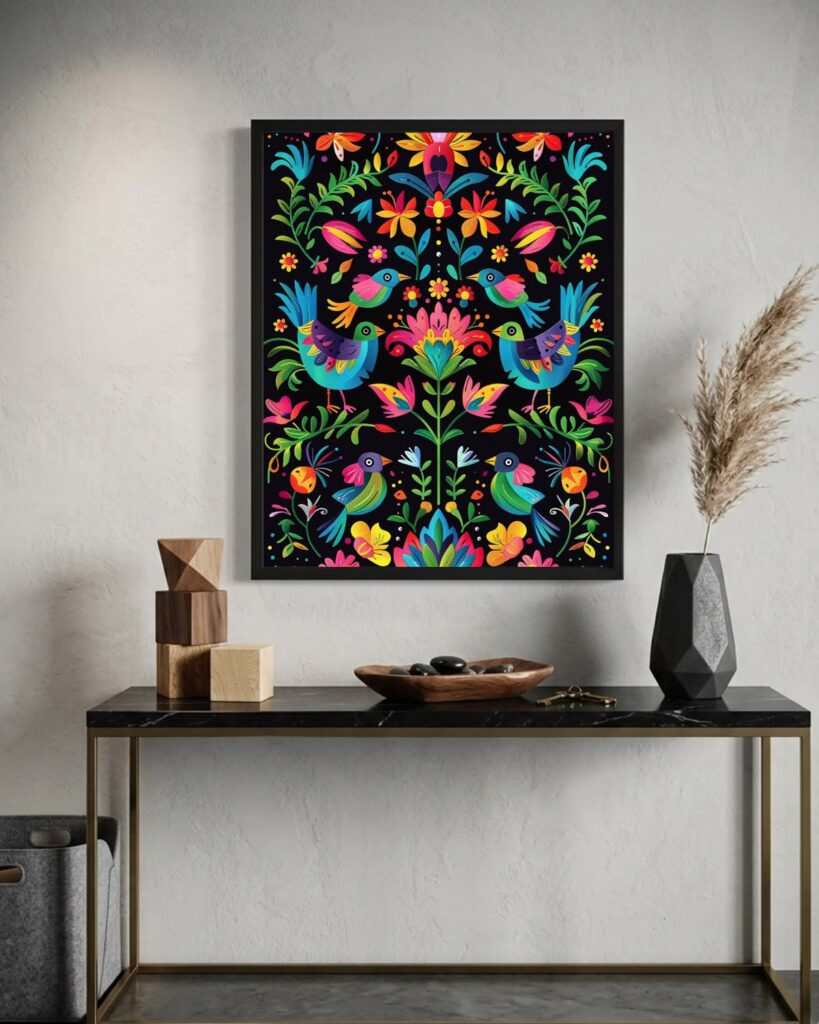
- Design style: Whimsical, nature-inspired, and colorful
- Best placement: Framed above a console table or as a textile hanging on its own
- Color combinations: Bright pink, orange, and turquoise on white
- Styling tip: Frame the textile to protect it and give it a more polished look
- Pros: Adds a fun, unexpected pop of color
- Cons: Fabric pieces need extra care to avoid fading in direct sunlight
Mexican Textile Wall Hangings
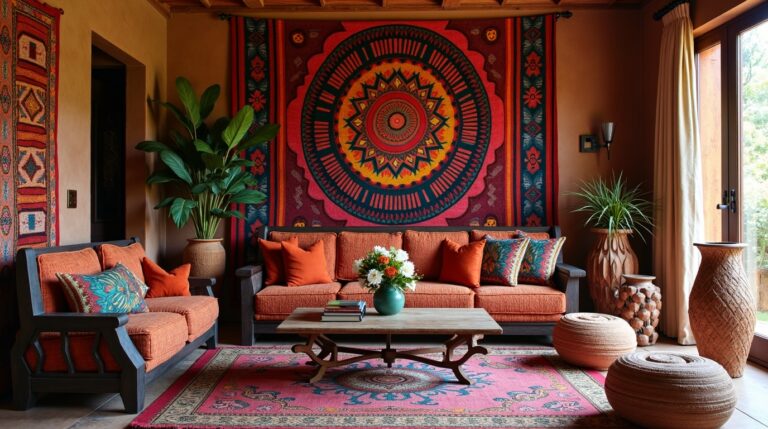
These include woven blankets, tapestries, and rugs hung on the wall instead of the floor, often in striped or geometric patterns.
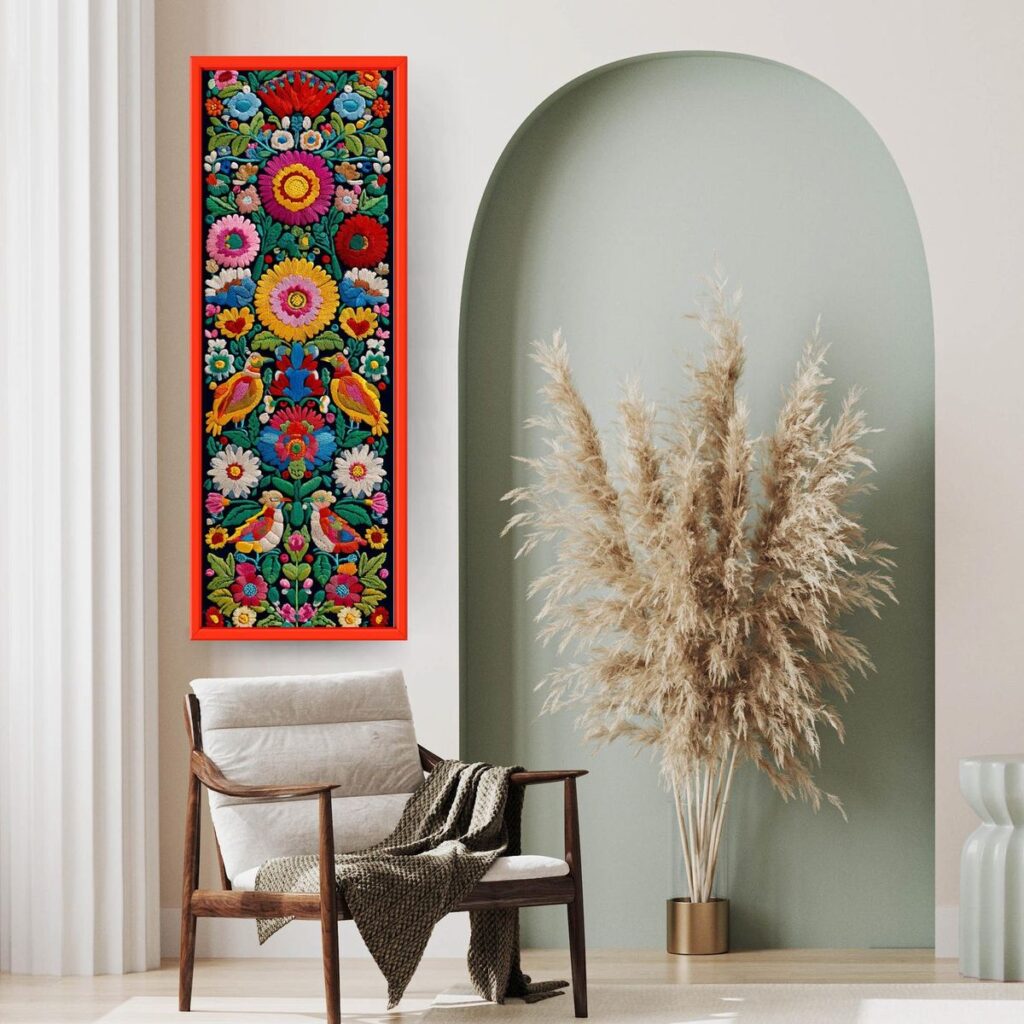
- Design style: Bohemian, cozy, and textured
- Best placement: Above a sofa, behind a bed if visible from the living room, or on a large blank wall
- Color combinations: Earth tones with pops of red, orange, or turquoise
- Styling tip: Use a wooden dowel to hang the textile for a relaxed, gallery-style look
- Pros: Adds softness and sound absorption to a room
- Cons: Can collect dust, so occasional cleaning is needed
Modern Mexican Abstract Art
This style takes traditional Mexican colors and patterns and reimagines them in a modern, abstract way using bold shapes and color blocks.
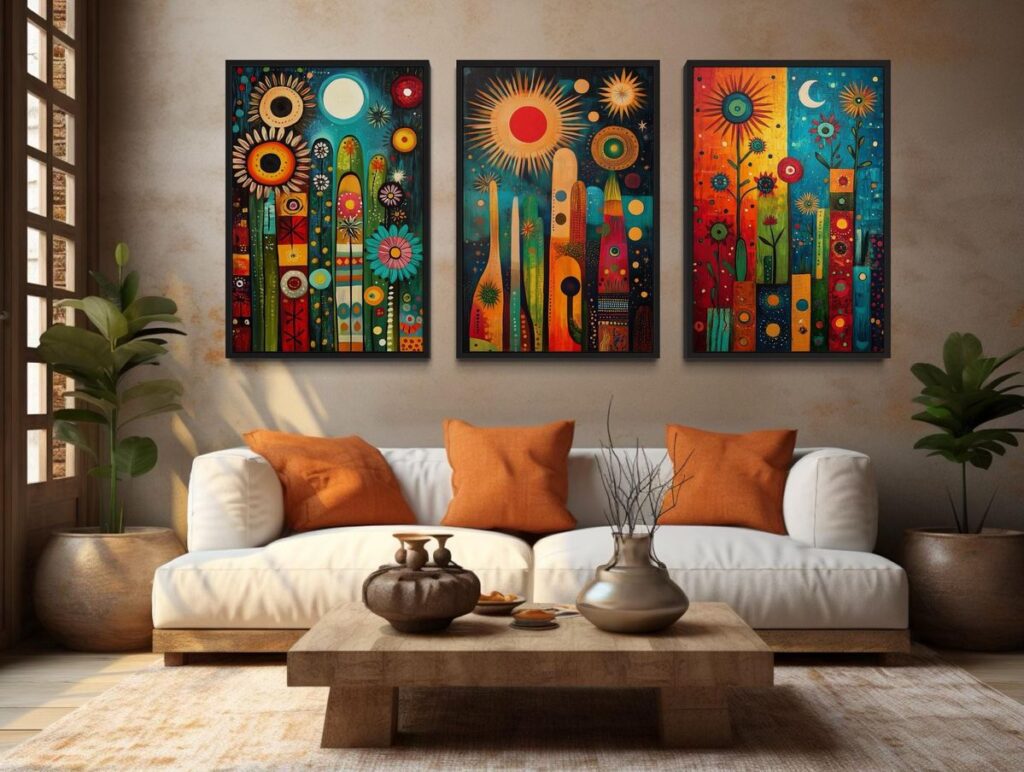
- Design style: Contemporary, bold, and minimal
- Best placement: Modern living rooms, open-concept spaces, or above a media console
- Color combinations: Terracotta, mustard, and deep teal in clean shapes
- Styling tip: Pair with simple, modern furniture to let the art stand out
- Pros: Bridges traditional and modern styles easily
- Cons: May feel less “authentic” to buyers looking for handmade, traditional pieces
How to Choose the Perfect Mexican Wall Art
Picking the right piece comes down to a few key factors.
Room size and wall dimensions matter more than people think. A small piece on a huge wall can look lost. A large piece in a small room can feel overwhelming. Measure your wall before you shop, and aim for art that takes up about two-thirds of the available space above a sofa or console.
Color schemes should guide your choice. Look at your walls, furniture, and flooring. Pick art that either matches your existing colors or adds a complementary pop. If your room is mostly neutral, bold Mexican art can become the star of the show.
Furniture matching is also important. A rustic wood piece might clash with sleek, modern furniture, while a modern abstract piece might feel out of place in a heavily traditional hacienda-style room. Aim for at least one element in your art that connects to your furniture style.
Lighting changes how art looks throughout the day. Bright, sunny rooms can handle bold colors well. Darker rooms may benefit from art with lighter backgrounds to avoid feeling too heavy.
Budget is the final piece. Authentic, handmade Mexican art can range widely in price. Set a budget before you shop, but also remember that quality often shows in the details, like brushwork, material thickness, and finish.
Styling Tips for Mexican Living Room Walls
Once you’ve picked your art, styling makes all the difference.
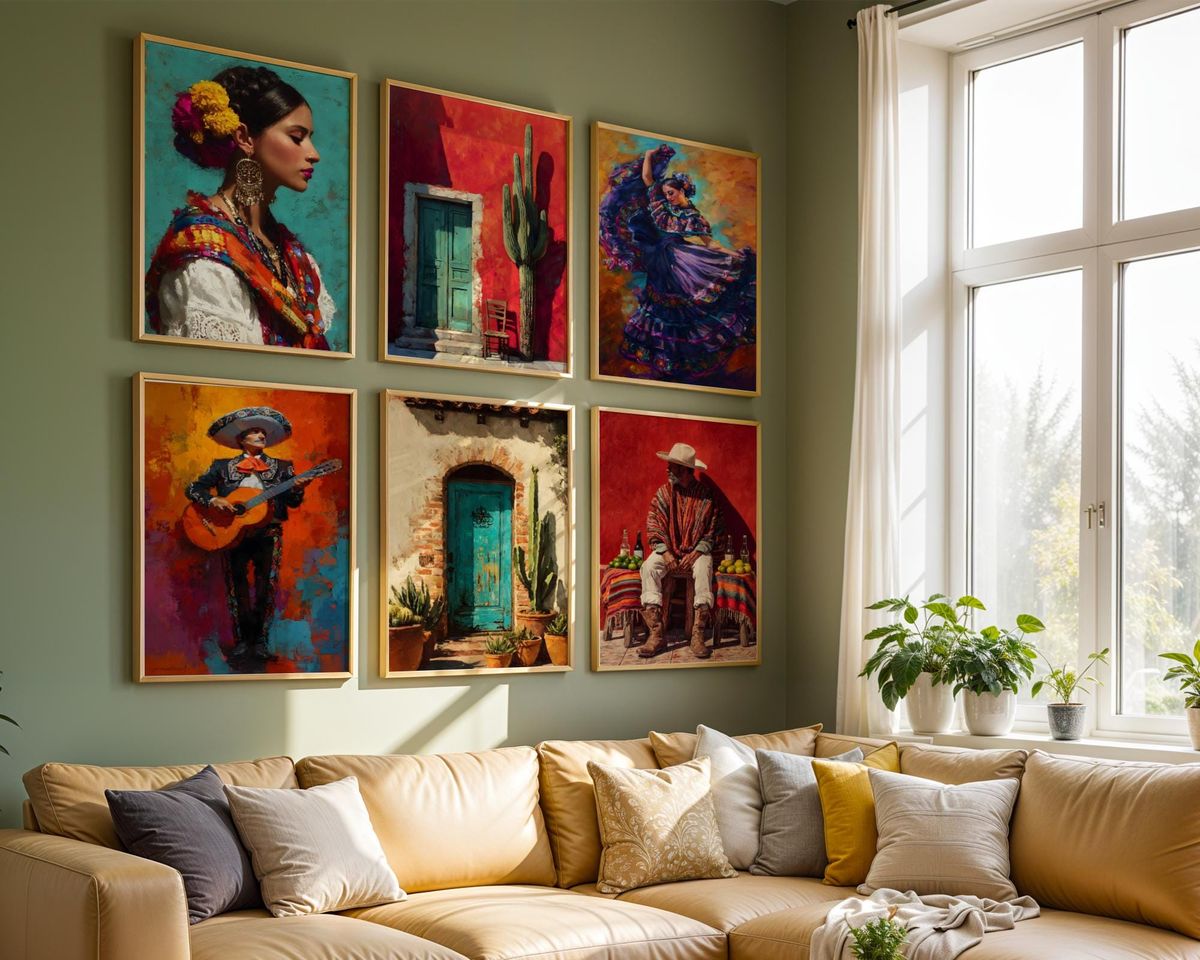
Gallery walls work great for smaller pieces like folk art paintings or Otomi prints. Mix sizes and shapes, but keep a common color thread running through each piece so the wall feels put together, not random.
Accent walls are perfect for bold Talavera tile art or a single large canvas. Choose one wall to be the star, and keep the others simple so the room doesn’t feel too busy.
Layering techniques add depth. Try combining a large textile hanging with a smaller metal sun sculpture in front of it, or pair a canvas painting with a small shelf holding pottery underneath.
Color coordination ties everything together. If your wall art features turquoise, bring that same shade into a throw pillow, vase, or rug. This creates a sense of flow throughout the room.
Mixing traditional and modern pieces is one of the best ways to make a space feel current. Pair a traditional Frida Kahlo print with a sleek, modern frame, or hang a rustic wood piece next to a clean-lined mirror.
Common Mistakes to Avoid
Even with great art, a few mistakes can hold a room back.
Hanging art too high is one of the most common issues. The center of your art should sit at eye level, usually around 57 to 60 inches from the floor.
Choosing pieces that are too small for the wall is another common problem. When in doubt, go bigger. A piece that feels slightly oversized often looks more intentional than one that feels too small.
Ignoring color balance can make a room feel chaotic. If your art is already bold and colorful, keep your walls and large furniture pieces more neutral so the art can shine.
Overcrowding walls with too many pieces at once can make a room feel cluttered instead of curated. Choose a few standout pieces rather than filling every inch of wall space.
Skipping quality checks when shopping online is a mistake that’s easy to avoid. Always read product details, check materials, and look at customer photos before buying, especially for handmade or textile pieces.
Mexican Wall Art Trends for 2026
This year’s trends build on tradition while adding fresh, modern touches.
Sustainable handcrafted art is growing fast. More buyers want to know their pieces are made by real artisans using responsible materials, not mass-produced overseas.
Modern Mexican minimalism is also on the rise. Think clean lines, simple shapes, and traditional colors used in a more restrained, modern way.
Oversized statement pieces are having a big moment. A single large canvas or sculpture can completely change the feel of a room, and 2026 is all about going big with at least one piece.
Mixed-media wall art combines materials like wood, metal, and fabric in a single piece. This adds texture and visual interest without needing multiple separate items.
Vintage Mexican aesthetics are also making a comeback, with retro travel posters, vintage textile patterns, and aged-look ceramics bringing a nostalgic feel to modern homes.
Conclusion
Mexican wall art brings something most decor trends can’t: real history, real craftsmanship, and real color. Whether you choose a hand-painted Talavera piece, a bold folk art painting, or a modern abstract canvas, you’re adding more than decoration. You’re adding a story to your walls.
Start small if you need to. Pick one piece that speaks to you, find its place on your wall, and build from there. Before long, your living room won’t just look good. It’ll feel like home.
FAQs about Best Mexican Wall Art for Living Room
1. What is the most popular type of Mexican wall art for living rooms?
Talavera tile art and hand-painted canvas pieces are among the most popular choices because they work well in both traditional and modern living rooms.
2. How big should Mexican wall art be above a sofa?
A good rule of thumb is to choose art that covers about two-thirds of the sofa’s width. This keeps the piece balanced with the furniture below it.
3. Can Mexican wall art work in a modern living room?
Yes. Modern Mexican abstract art and simple sun or moon sculptures pair beautifully with clean, modern furniture and neutral color schemes.
4. What colors pair best with Mexican wall art?
Warm neutrals like cream, tan, and light gray work well as a base, allowing the bold colors in Mexican art, like terracotta, turquoise, and mustard, to stand out.
5. How do I know if a piece of Mexican wall art is good quality?
Look for details like even paint application, sturdy materials, and clear craftsmanship in patterns. Reading product reviews and checking customer photos can also help confirm quality before you buy.
Key Takeaways
- Mexican wall art is trending in 2026 thanks to its bold colors, handmade quality, and growing presence on Pinterest and social media
- Popular styles include Talavera tile art, folk art paintings, Frida Kahlo-inspired pieces, and modern Mexican abstract art
- Choose art based on room size, color scheme, furniture style, lighting, and budget
- Style your space using gallery walls, accent walls, layering, and color coordination
- Avoid common mistakes like hanging art too high, choosing pieces that are too small, or overcrowding your walls
- 2026 trends include sustainable handcrafted art, modern minimalism, oversized statement pieces, mixed media, and vintage aesthetics