Mexican Bathroom Ideas: Talavera Tiles, Colors & Design Inspiration
There’s something undeniably captivating about stepping into a Mexican bathroom that radiates warmth, color, and artisan craftsmanship. Whether you’re renovating a compact powder room or transforming a primary suite, Mexican design offers a perfect marriage of visual drama and practical durability. The hand-painted ceramics, earthy textures, and vibrant color palettes aren’t just beautiful—they’re specifically suited to humid bathroom environments where moisture-resistant materials matter most.
Table of Contents
Mexican bathroom ideas have surged in popularity because they solve a common design dilemma: how to create a space that feels both luxurious and lived-in, polished yet personal. The combination of Talavera tiles, rustic wood accents, wrought iron fixtures, and colorful pottery creates layers of interest that elevate even the smallest spaces. These design elements have survived centuries in Mexico’s climate, proving their resilience against water, heat, and daily use.
As someone who’s explored countless home decor trends, I’ve watched Mexican style evolve from a regional aesthetic into a globally embraced approach that works in modern apartments, historic homes, and everything in between. The secret lies in balancing bold artistic elements with neutral foundations, creating spaces that feel curated rather than cluttered.
15 Mexican Bathroom Design Ideas (With Visual Guidance)
1. Talavera Tile Feature Wall Behind the Vanity
Transform your vanity area into an instant focal point with a floor-to-ceiling Talavera tile installation. These hand-painted ceramic tiles feature intricate geometric patterns and vibrant blues, yellows, greens, and terracottas that catch light beautifully throughout the day. A feature wall provides maximum visual impact while keeping costs manageable compared to tiling an entire room. The glossy finish reflects both natural and artificial light, making smaller bathrooms feel more spacious.
Consider mixing 4-6 complementary tile patterns in a patchwork arrangement rather than using a single repetitive design. These handcrafted Talavera tiles come in sets with coordinating patterns that create visual harmony while maintaining the artisan quality that makes Mexican tile so distinctive.
2. Colorful Powder Room Immersion
Small powder rooms offer the perfect opportunity for bold Mexican bathroom decor without overwhelming larger spaces. Paint walls in deep terracotta, cobalt blue, or golden ochre, then add white Talavera accents around the mirror or as a backsplash. The enclosed nature of powder rooms makes saturated color feel cozy rather than oppressive, and guests will remember the space long after they leave.
Complement painted walls with a hand-painted Mexican vessel sink and a carved wood mirror frame. The combination of matte wall color and glossy tile creates textural contrast that adds sophistication to the bold palette.
3. Rustic Wood Vanity with Colorful Tile Backsplash
Balance the vibrancy of Talavera tile bathroom designs with substantial wood elements that ground the space. A chunky reclaimed wood vanity or floating shelf in warm pine or mesquite provides an organic counterpoint to geometric tile patterns. The wood’s natural grain and warm tones prevent colorful tiles from feeling too busy or contemporary.
This combination works exceptionally well in bathrooms with good natural light, where the interplay between wood texture and glazed tile creates visual depth. Add oil-rubbed bronze hardware and a vessel sink to complete the look.
4. Modern Mexican Spa-Style Retreat
Mexican design doesn’t require a traditional or rustic approach. Create a serene spa bathroom by using Talavera tiles sparingly as accent strips within larger expanses of white or cream subway tile. Install floor tiles in neutral limestone or travertine, then add pops of hand-painted ceramic through a decorative border at eye level or as a shower niche backdrop.
Pair this restrained tile approach with modern fixtures in matte black or brushed gold, floating vanities, and minimalist Mexican pottery as decorative accents. The result feels contemporary while honoring traditional craftsmanship.
5. Shower Enclosure with Full Talavera Installation
For true colorful bathroom ideas that make a lasting impression, tile an entire walk-in shower with mixed Talavera patterns. The combination of steam, water, and light reflecting off hand-glazed surfaces creates an almost jewel-box effect. Choose patterns that share a common color palette but vary in scale and complexity to maintain visual interest without chaos.
Include a built-in tiled bench and niches for products, extending the decorative tile into functional elements. These Talavera shower tile sets include coordinating pieces specifically sized for shower installations, corners, and trim work.
6. Black and White Foundation with Talavera Accents
Create a sophisticated backdrop using black and white geometric cement tiles on floors, then introduce color exclusively through Talavera tile accents, textiles, and pottery. This approach allows you to adjust color intensity over time by swapping towels, rugs, and accessories without committing to permanent bold finishes on large surfaces.
The high contrast of black and white provides graphic punch while letting colorful Mexican elements remain the stars. This strategy works particularly well in bathrooms that connect to bedrooms or hallways with more neutral palettes.
7. Talavera Tile Stair Risers Leading to Bath
If your bathroom includes steps or different levels, tile the risers with mixed Talavera patterns. This unexpected application showcases the tiles’ artistry while solving the practical challenge of finishing vertical surfaces. The ascending pattern draws the eye upward and makes the transition between levels feel intentional and decorative.
Combine tiled risers with terracotta or saltillo floor tiles for authentic Mexican texture underfoot.
8. Floating Wood Shelf with Integrated Tile Backsplash
Install a floating wood vanity shelf with a Talavera tile backsplash that extends several inches above the shelf surface. This creates a practical splash guard while framing the sink and mirror in decorative tile. The linear installation is more cost-effective than covering entire walls while still delivering significant visual impact.
Choose hand-painted Mexican vessel sinks in complementary colors to create cohesion between the tile and sink without exact matching, which can feel forced.
9. Earth-Tone Palette with Terra Cotta Warmth
Not all Mexican bathroom ideas require bright colors. Create a soothing neutral space using terracotta, cream, warm gray, and natural wood tones, then add subtle pops of Talavera tile in muted blues and greens. This approach captures Mexican warmth without the intensity of traditional vibrant palettes.
Natural stone sinks, woven baskets for storage, and rustic mirrors complete this earthy interpretation that works beautifully in spaces seeking calming spa-like qualities.
10. Arched Doorways and Niches with Tile Trim
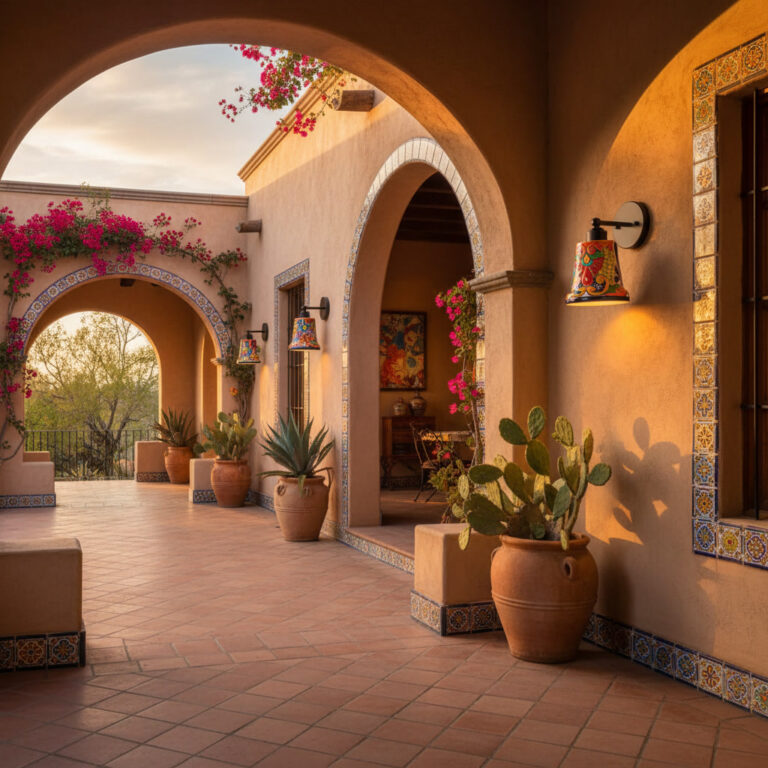
Enhance architectural features like arched doorways, windows, or built-in niches with Talavera tile trim. Running a border of decorative tile around these curved elements emphasizes their shape while introducing color in a controlled, architectural way. The technique draws attention to the room’s structural details rather than treating tile as pure decoration.
This works especially well in bathrooms with Spanish Colonial or Mediterranean architecture where arches already exist.
11. Colorful Baseboards and Crown Molding Alternative
Replace traditional baseboards with a row of Talavera tiles running along the floor-wall junction. This unexpected detail adds personality without the commitment of larger installations. The tiles protect walls from water and cleaning products while introducing pattern at an unusual sight line that surprises and delights.
Combine with simple painted walls and wood furniture for a look that balances tradition and simplicity.
12. Mix Talavera with Moroccan or Spanish Tile
Layer different tile traditions for a collected, traveled aesthetic. Combine Talavera’s painterly quality with Moroccan zellige’s geometric precision or Spanish azulejo’s graphic patterns. Choose styles that share colors but differ in scale and complexity to create sophisticated contrast.
This eclectic approach suits larger bathrooms where you can dedicate different zones to different tile styles while maintaining color continuity.
13. Windowsill and Ledge Tile Treatment
Tile windowsills, ledges, and horizontal surfaces with Talavera for practical, decorative surfaces that resist water and showcase tile patterns at eye level. These smaller applications allow you to use more expensive artisan tiles without budget strain while creating functional display areas for plants, candles, and bath products.
The horizontal orientation lets you appreciate tile details that might be lost on large vertical installations.
14. Bold Painted Ceiling with Tile Accents
Paint the ceiling in a bold Mexican color like deep turquoise or coral, then add a Talavera tile border where walls meet ceiling. This unexpected approach draws the eye upward and makes standard-height bathrooms feel more spacious and dramatic. The tile border provides visual weight that prevents the colored ceiling from feeling like an afterthought.
Keep walls neutral to let the ceiling become the focal point without overwhelming the space.
15. Talavera Tile Behind Wall-Mounted Toilet
Create an accent wall behind a wall-mounted toilet using mixed Talavera patterns. The vertical rectangle of tile frames the fixture while turning a utilitarian element into a design feature. This placement works especially well in small bathrooms where the toilet wall is visible immediately upon entering.
Pair with a floating vanity and wall-mounted faucets to maintain the airy, modern feeling that complements traditional tile.
Tile Placement Ideas: Where Talavera Makes the Biggest Impact
Backsplash Behind Sink
Pros: Cost-effective way to introduce pattern, protects walls from water damage, easy DIY project for beginners, creates instant focal point at eye level
Cons: Limited visual impact in larger rooms, requires careful measurement around plumbing, may need frequent cleaning in high-splash areas
A sink backsplash typically requires 15-30 tiles depending on vanity width, making it one of the most budget-friendly Talavera applications. Extend the tile 6-12 inches above the faucet and to the edges of the vanity for professional proportions. These 4×4 Talavera tiles are perfectly sized for standard backsplash installations.
Accent Wall Behind Toilet or Vanity
Pros: Dramatic visual impact, defines separate zones in larger bathrooms, showcases tile patterns effectively, increases perceived value of space
Cons: Higher material and labor costs, permanent design commitment, may overwhelm small rooms, requires professional installation for best results
A full accent wall typically measures 40-80 square feet, requiring 100-200 tiles. This investment makes sense in bathrooms where you want a signature design moment. Mix 3-5 coordinating patterns rather than using a single design to create artisan authenticity.
Full Shower Tile Installation
Pros: Maximum durability in wet environment, creates immersive color experience, luxury spa feeling, protects all shower surfaces
Cons: Most expensive application, requires professional waterproofing, permanent design choice, can feel busy without careful pattern selection
Expect to use 150-300 tiles for an average shower enclosure including walls and floor. Focus more intricate patterns at eye level and use simpler coordinating designs near the floor and ceiling. The investment pays off in long-term durability and daily enjoyment of a truly custom space.
Sink & Mirror Options: Choosing Authentic Mexican Fixtures
Hand-Painted Mexican Vessel Sinks
These elevated bowl-style sinks sit atop the vanity counter, showcasing their decorative exteriors. Look for sinks with Talavera-style patterns that coordinate with your tile choices, or choose contrasting designs that add layers of pattern. Vessel sinks work best with wall-mounted or tall deck-mounted faucets that arch over the bowl’s rim.
Quality hand-painted sinks feature glazed interiors for easy cleaning and durability. This hand-painted Mexican vessel sink includes a drain and mounting ring, making installation straightforward for DIYers.
Rustic Stone Basins
Carved from natural stone like travertine, onyx, or volcanic rock, these sinks bring organic texture that balances colorful tile. Stone sinks work particularly well in earth-tone bathrooms where you want Mexican warmth without bright colors. Each sink is unique due to natural stone variations, adding one-of-a-kind character.
Stone requires periodic sealing to prevent water absorption and staining, but proper maintenance ensures decades of use.
Modern Ceramic Vessels with Mexican Accents
For contemporary spaces, choose simple white or cream ceramic vessels with subtle decorative details like hand-painted rims, textured exteriors, or metallic glazes. These provide a nod to Mexican craftsmanship without committing to full traditional style.
Pair modern vessels with matte black or brushed gold faucets for sophisticated contrast.
Carved Wood Mirrors
Substantial wood frames carved with geometric or floral motifs add architectural presence above vanities. Look for mirrors in dark stained wood for drama or natural pine for warmth. The carved details echo the handcrafted quality of Talavera tiles while providing textural variety.
Sizes range from compact 24-inch rounds perfect for powder rooms to expansive 48-inch rectangular styles for double vanities.
Talavera-Framed Mirrors
Mirrors surrounded by actual Talavera tiles create perfect coordination with tiled backsplashes or accent walls. The tile frame can match your installation exactly or introduce complementary patterns. These work best as statement pieces in powder rooms or above pedestal sinks where the mirror is a primary focal point.
This Talavera-framed mirror features hand-painted tiles in a coordinating pattern collection that pairs beautifully with any Mexican bathroom design.
Minimalist Modern Mirrors with Mexican Accents
Frameless mirrors or simple metal-framed options let colorful tile remain the star while providing necessary function. Choose round mirrors to soften the geometry of square tiles, or select rectangular mirrors with thin black frames for contemporary edge.
This restrained approach works well when you’ve invested in dramatic tile installations and need other elements to recede visually.
Color Schemes for Mexican Bathrooms
Earth Tones + Talavera
Foundation: Terracotta, cream, warm taupe, natural wood Accent colors: Cobalt blue, sage green, golden yellow through tile
This warm, grounded palette creates spa-like serenity while maintaining Mexican character. Use earth tones on 70% of surfaces, reserving vibrant Talavera for strategic accents. The combination feels organic and timeless, working beautifully in bathrooms that connect to bedrooms or living spaces with neutral palettes.
Add texture through natural fiber rugs, woven baskets, and linen towels to enhance the earthy quality.
Black & White + Bold Accent Tiles
Foundation: White walls, black fixtures, black and white floor tile Accent colors: Any Talavera palette—turquoise, coral, yellow, green
High contrast black and white provides graphic sophistication while giving you complete freedom in Talavera color choices. This scheme works particularly well in modern homes where traditional all-over color might feel out of place. The neutral foundation also makes it easy to change accent colors over time by swapping tile or accessories.
Focus color in one area—either a shower wall or vanity backsplash—rather than distributing it throughout the space.
Warm Neutrals with Colorful Pops
Foundation: Cream, beige, warm gray, natural wood Accent colors: Selective use of one or two Talavera colors
This subtle approach suits those who love Mexican tile but want flexibility. Use primarily neutral tile with strategic placement of 10-20 colorful Talavera pieces as jewelry accents. The restrained color creates sophisticated understatement while maintaining handcrafted authenticity.
Complement with colorful towels and bath mats that can be changed seasonally without renovating.
DIY vs. Professional Installation: Making Smart Choices
When DIY Makes Sense
Small backsplash projects (under 20 square feet), accent borders, single wall applications, and decorative trim work are accessible for confident DIYers with basic tile experience. Talavera tiles install similarly to standard ceramic tile using thinset mortar and grout, with the main difference being the care required to preserve hand-painted surfaces.
Cost savings: 40-60% compared to professional installation Time investment: Weekend project for small applications Skill requirements: Ability to cut tile, apply mortar evenly, grout cleanly
This tiling tool kit includes spacers, float, and cutting tools needed for DIY installation.
When to Hire Professionals
Shower enclosures, large wall installations (over 40 square feet), complex patterns, and any project requiring waterproofing membrane should be left to experienced tile installers. The cost of fixing failed waterproofing or uneven tile far exceeds the installation savings. Professional installers also have experience handling delicate hand-painted tiles without damaging finishes.
Expect to pay $8-15 per square foot for professional installation, with higher rates for intricate patterns or small tile sizes.
Cost Comparison Ranges
DIY backsplash (15 sq ft): $300-600 (materials only) Professional backsplash: $500-900 (materials + labor) DIY shower (100 sq ft): $2,000-3,500 (materials only) Professional shower: $3,500-6,000 (materials + labor)
These ranges assume quality Talavera tiles at $8-15 per square foot.
Safety Considerations
Tile cutting generates silica dust—always use wet saws outdoors or with proper ventilation and dust masks. Thinset and grout contain chemicals that irritate skin—wear gloves throughout the process. Working in bathrooms requires careful protection of existing fixtures, floors, and ventilation equipment.
Professional installers carry liability insurance that protects you if water damage occurs due to improper installation, a crucial consideration for shower projects.
Maintenance & Cleaning Tips: Protecting Your Investment
How to Protect Talavera Tiles
Seal grout lines every 12-18 months using penetrating grout sealer to prevent water infiltration and staining. The tiles themselves have glazed surfaces that don’t require sealing, but grout is porous and needs protection. Apply sealer with a small brush, wiping excess from tile surfaces immediately.
Avoid abrasive cleaners, scrub brushes, or scouring pads that can scratch glazed surfaces. Hand-painted details are durable but not impervious to harsh treatment.
Daily and Weekly Cleaning
Clean Talavera tiles with pH-neutral cleaner and soft cloth or microfiber mop. Avoid acidic cleaners like vinegar or harsh alkaline products that can gradually dull glazed surfaces. For shower tiles, squeegee after each use to prevent hard water deposits and soap scum buildup.
Weekly deep cleaning with mild dish soap and warm water keeps tiles vibrant. Address any grout discoloration promptly with oxygen bleach rather than chlorine bleach, which can discolor grout over time.
Prevent Moisture Damage
Ensure bathroom ventilation removes humidity effectively—run exhaust fans during showers and for 20 minutes after. Excess humidity can penetrate grout and reach substrate materials, causing mold or deterioration behind tiles. In bathrooms without windows, consider upgrading to higher-capacity exhaust fans.
Address any grout cracks immediately by removing damaged grout and regrouting to prevent water infiltration.
Long-Term Durability Tips
Quality Talavera tiles last 50-100+ years with proper installation and care. The main vulnerabilities are grout failure and substrate water damage rather than tile deterioration. Invest in proper waterproofing membranes during installation, especially in shower applications.
If tiles crack or chip due to impact, individual pieces can be replaced by carefully removing damaged tile and installing a new one—this is one advantage of patchwork patterns where exact matching isn’t critical.
Avoid dropping heavy objects or using bathrooms as workshops where tools might impact tile surfaces. Despite their durability, ceramic tiles can crack under impact stress.
10 Must-Haves for a Mexican Bathroom
Creating an authentic Mexican bathroom requires thoughtful selection of complementary elements that work together. Here are the essential items that transform a standard bathroom into a cohesive Mexican-inspired retreat:
- Mixed Talavera Tile Set (4×4 or 6×6 tiles) – Foundation for backsplash or accent wall with coordinating patterns
- Hand-Painted Vessel Sink – Artistic focal point that showcases traditional Mexican craftsmanship
- Carved Wood Mirror – Substantial frame in dark stain or natural pine that adds architectural presence
- Colorful Mexican Textiles – Vibrant towels in traditional patterns or solid jewel tones
- Patterned Bath Rug – Geometric design that coordinates with tile colors while providing comfort
- Oil-Rubbed Bronze Faucet – Coordinates with rustic Mexican aesthetic better than chrome or brushed nickel
- Wrought Iron Towel Bar – Hand-forged look with decorative scroll ends
- Talavera Soap Dispenser – Hand-painted ceramic coordinates with tile work
- Mexican Folk Art Prints – Framed artwork featuring traditional motifs or landscapes
- Woven Storage Basket – Natural fiber basket for towels or toiletries adds organic texture
The beauty of Mexican bathroom ideas lies in their flexibility—you can embrace full color immersion or introduce elements gradually through strategic tile placement and carefully chosen accessories. Whether you’re renovating a powder room or transforming a primary bath, the combination of Talavera tile bathroom artistry with rustic wood, wrought iron, and vibrant textiles creates spaces that feel both timeless and personal.
The key to success is starting with a clear vision of your desired intensity level, then building layers through tile, fixtures, and accessories that work together. Even small applications of hand-painted tile can transform ordinary bathrooms into spaces with soul and character that improve your daily routine and increase your home’s value.
Remember that authentic Mexican design celebrates imperfection—the slight variations in hand-painted tiles and artisan-crafted fixtures are features, not flaws. These irregularities prove you’ve invested in genuine craftsmanship rather than mass-produced imitations, creating a bathroom with depth, history, and enduring appeal.